


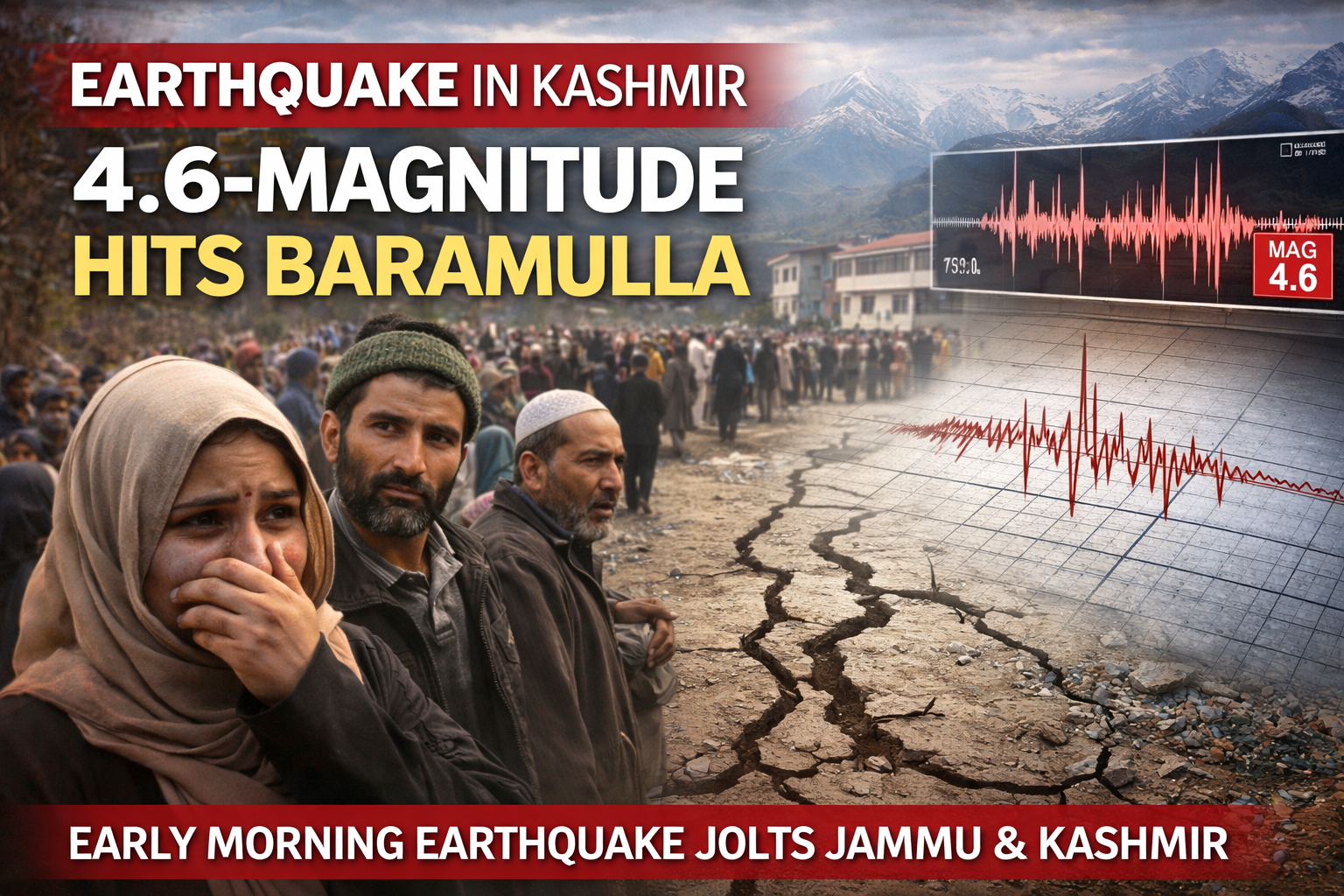
Kashmir Earthquake Today: 4.6-Magnitude Tremor Strikes Baramulla District
An earthquake measuring 4.6 on the Richter scale struck the Baramulla district of Jammu and Kashmir early this morning, triggering brief panic among residents who were jolted awake by sudden tremors. According to preliminary reports from seismic monitoring agencies, the earthquake occurred in the early hours, when most people were asleep, causing many to rush out of their homes in fear.
As of now, no immediate reports of casualties or major damage have been confirmed by local authorities. However, officials are continuing to assess the situation, especially in remote and mountainous areas where communication can sometimes be delayed.
Earthquake Details: Time, Location, and Depth
According to data released by the National Center for Seismology (NCS), the earthquake struck at approximately early morning hours, with its epicenter located in Baramulla district, a region known for its seismic sensitivity.
Key Details at a Glance:
-
Magnitude: 4.6
-
Epicenter: Baramulla district, Jammu and Kashmir
-
Depth: Shallow (making tremors more noticeable)
-
Time: Early morning (local time)
Shallow earthquakes, even when moderate in magnitude, are often felt more intensely on the surface. This explains why residents across Baramulla and nearby areas reported noticeable shaking despite the quake not being classified as major.
Panic Among Residents, No Major Damage Reported
Residents of Baramulla described being awakened by swaying furniture, rattling windows, and vibrating doors. Many stepped outside their homes as a precaution, fearing aftershocks.
“The bed started shaking, and we heard a strange rumbling sound. Everyone in the house rushed out immediately,” said a local resident.
Despite the panic, initial assessments suggest no structural damage to houses, schools, or public buildings. Hospitals and emergency services have not reported any injuries linked to the earthquake so far.
Tremors Felt Beyond Baramulla
While the epicenter was in Baramulla, mild tremors were reportedly felt in nearby districts, including parts of Kupwara, Sopore, and even some areas closer to Srinagar.
Social media platforms quickly filled with posts from residents sharing their experiences, with many confirming they felt the quake but were relieved to find no damage afterward.
Why Is Kashmir Prone to Earthquakes?
Jammu and Kashmir lies in one of the most seismically active zones in India. The region is situated near the Himalayan seismic belt, where the Indian tectonic plate collides with the Eurasian plate.
This continuous tectonic movement makes earthquakes in Kashmir frequent, though most are low to moderate in magnitude.
Seismic Zones in Kashmir
-
Most parts fall under Seismic Zone IV and V
-
Zone V is categorized as very high risk
Historically, the region has witnessed devastating earthquakes, including the 2005 Kashmir earthquake, which caused massive loss of life and infrastructure damage.
Authorities on Alert, Situation Being Monitored
Following the earthquake, district administration and disaster response teams were placed on alert. Officials confirmed that they are closely monitoring the situation and are prepared to respond if aftershocks occur.
Emergency helplines remain operational, and residents have been advised to:
-
Stay calm
-
Avoid damaged structures
-
Follow safety protocols
So far, there has been no advisory for evacuation, as the situation remains stable.
Aftershocks: Should Residents Be Concerned?
Experts note that minor aftershocks are common following earthquakes, particularly in seismically active regions like Kashmir. However, there is no immediate indication of a stronger quake following this tremor.
Seismologists recommend vigilance but emphasize that panic is unnecessary unless official warnings are issued.
Earthquake Safety Tips for Residents
Given Kashmir’s seismic history, preparedness is essential. Authorities and disaster management experts advise residents to keep these safety measures in mind:
During an Earthquake
-
Drop, Cover, and Hold
-
Stay away from windows and heavy objects
-
Do not use elevators
After an Earthquake
-
Check for injuries
-
Inspect gas and electrical lines
-
Be prepared for aftershocks
Impact on Daily Life and Infrastructure
As of this morning, normal life in Baramulla continues uninterrupted. Schools, offices, and transportation services are operating as usual. No road blockages or landslides have been reported, which is often a concern in hilly regions after seismic activity.
Government’s Focus on Disaster Preparedness
Over the years, the government has increased its focus on:
-
Earthquake-resistant construction
-
Disaster response training
-
Early warning systems
However, experts argue that more awareness and stricter building regulations are needed in high-risk zones like Kashmir to minimize future risks.
Public Reaction on Social Media
The earthquake quickly became a trending topic, with hashtags like #KashmirEarthquake and #Baramulla gaining traction. Many users expressed concern, while others shared relief after learning there were no casualties.
Conclusion: Situation Stable but Vigilance Needed
The 4.6-magnitude earthquake in Baramulla serves as yet another reminder of Kashmir’s seismic vulnerability. While no damage or casualties have been reported so far, authorities continue to monitor the situation closely.
Residents are urged to remain calm, stay informed through official channels, and follow safety guidelines. As of now, the situation is under control, and there is no cause for immediate alarm.
❓ FAQs (Google Discover + Featured Snippet Friendly)
Q1. Where did the earthquake occur in Kashmir today?
The earthquake occurred in the Baramulla district of Jammu and Kashmir.
Q2. What was the magnitude of the Kashmir earthquake?
The earthquake measured 4.6 on the Richter scale.
Q3. Were there any casualties reported?
No casualties or major damage have been reported so far.
Q4. Were tremors felt in other areas?
Yes, mild tremors were felt in nearby districts such as Kupwara and Sopore.
Q5. Is Kashmir a high earthquake-risk zone?
Yes, Kashmir falls under Seismic Zones IV and V, making it highly prone to earthquakes.