


News Highlights
-
Major unions AIBEA and AIBOA lead protest
-
SBI and Bank of Baroda issue warnings
-
Cash and cheque clearance delays reported
-
Digital banking remains operational
-
Labour code reforms at center of controversy
Table of Contents
-
Nationwide Bank Strike February 12 Overview
-
Why the Nationwide Bank Strike February 12 Was Called
-
Role of AIBEA and AIBOA in the Nationwide Bank Strike February 12
-
Impact of Nationwide Bank Strike February 12 on SBI and Major Banks
-
How Customers Are Affected During Nationwide Bank Strike February 12
-
Cash Transactions and Cheque Clearance Delays
-
Digital Banking During Nationwide Bank Strike February 12
-
Government Response to Nationwide Bank Strike February 12
-
Economic Impact of Nationwide Bank Strike February 12
-
What Customers Should Know
-
Conclusion
-
FAQs
Nationwide Bank Strike February 12: Full Detailed Analysis
Nationwide Bank Strike February 12 has triggered widespread concern across India as major bank unions initiated a coordinated protest against the implementation of new labour codes. The Nationwide Bank Strike February 12 has significantly impacted public sector banking operations, creating uncertainty among customers and raising larger questions about labour reforms and the future of India’s banking workforce.
The strike was called by prominent banking unions including the All India Bank Employees Association and the All India Bank Officers’ Association. These unions have expressed serious objections to the recently introduced labour codes, arguing that the reforms could weaken employee protections, reduce bargaining power, and compromise job security. The Nationwide Bank Strike February 12 reflects growing tensions between labour organizations and policymakers regarding structural reforms in the financial sector.
Across several states, banking operations were partially disrupted. Leading public sector institutions such as State Bank of India and Bank of Baroda issued advance notices warning customers about potential service interruptions. These alerts emphasized that branch-level operations could be affected depending on staff participation in the Nationwide Bank Strike February 12.
The labour codes in question aim to consolidate existing employment laws into simplified frameworks. Government sources maintain that these reforms are intended to modernize India’s labour system and improve ease of doing business. However, unions argue that the changes may dilute worker rights, particularly concerning job protection, working hours, and collective bargaining mechanisms. Further details on India’s labour reforms can be accessed through the official Ministry of Labour website at https://labour.gov.in which provides comprehensive policy documentation.
The Nationwide Bank Strike February 12 highlights a broader debate about balancing economic reform with workforce protection. Banking unions contend that financial sector employees already face increasing pressure due to digital transformation, branch rationalization, and performance-linked evaluations. They argue that additional structural reforms without adequate safeguards could destabilize employee morale and operational efficiency.
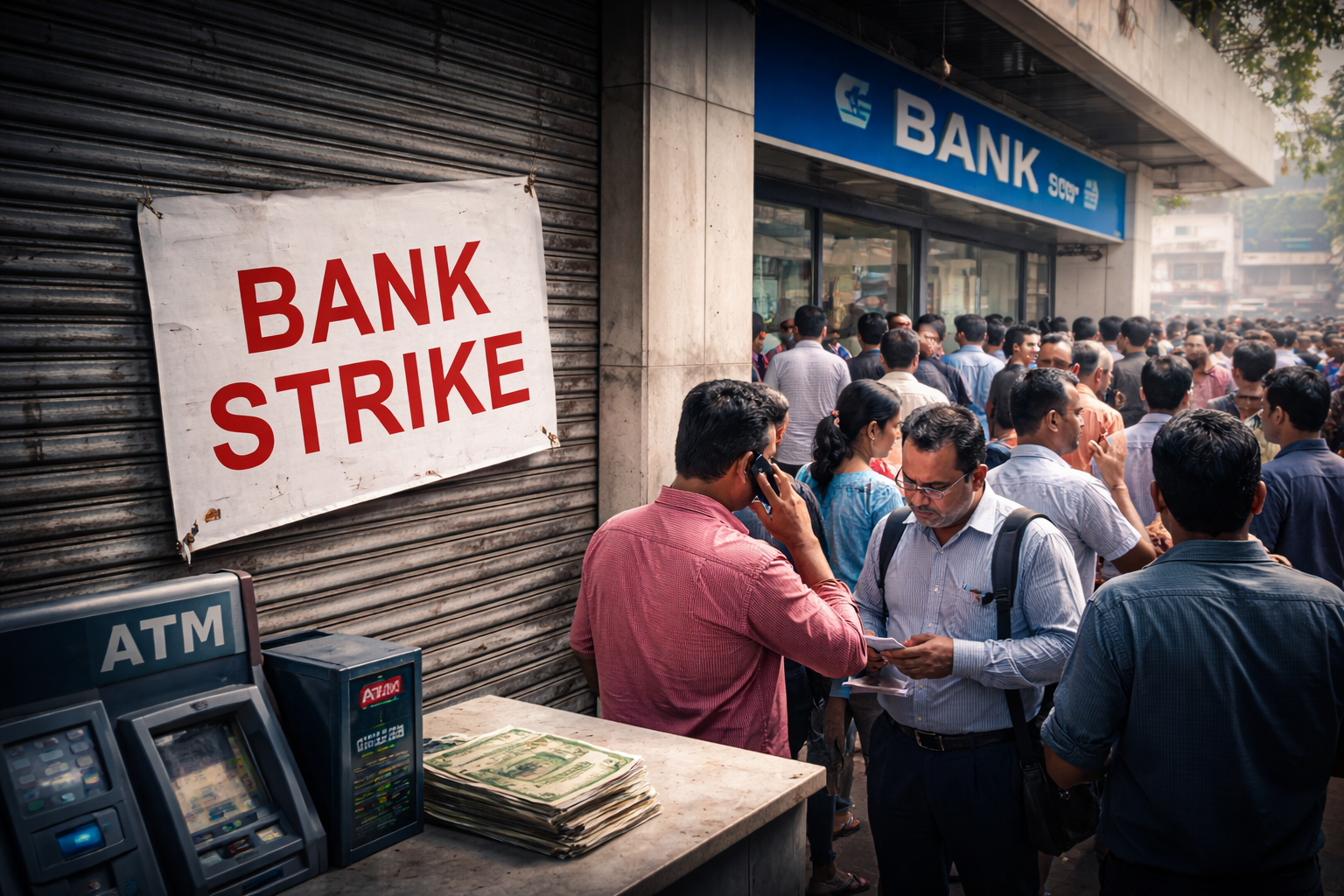
During the Nationwide Bank Strike February 12, customers reported delays in cash deposits, withdrawals, cheque clearances, and loan processing. While ATM networks largely continued functioning, branch-based services experienced noticeable interruptions in areas where union participation was strong. Financial experts suggest that short-term disruptions are typical during organized labour strikes, but prolonged industrial action could potentially affect liquidity flow and customer confidence.
Digital banking services, however, continued to operate relatively smoothly. Internet banking, mobile applications, and UPI transactions were not directly affected by the Nationwide Bank Strike February 12, demonstrating the resilience of India’s digital banking infrastructure. Information regarding digital payment stability can be explored through the Reserve Bank of India’s official website at https://www.rbi.org.in which regularly publishes updates on financial system functionality.
The economic implications of the Nationwide Bank Strike February 12 depend largely on its duration and intensity. A single-day strike may cause temporary inconvenience, but extended industrial action could influence trade settlements, business payments, and credit cycles. Small businesses that rely heavily on branch-level services could face operational delays if similar protests continue in the future.
The Nationwide Bank Strike February 12 also underscores the evolving nature of labour activism in India’s banking sector. Historically, bank strikes have been organized to protest privatization efforts, mergers, and policy changes. This latest strike indicates that workforce organizations remain vigilant about reforms that may impact employment conditions.
Government representatives have not indicated immediate rollback plans regarding the labour codes. Officials argue that the reforms aim to standardize employment regulations and boost investment attractiveness. However, dialogue between union leaders and policymakers may intensify following the Nationwide Bank Strike February 12 to prevent escalation.
Customers are advised to remain informed about service availability and utilize digital alternatives wherever possible. Financial planners recommend scheduling non-urgent branch visits outside strike periods to avoid inconvenience. Although the Nationwide Bank Strike February 12 has caused disruptions, essential banking infrastructure remains operational.
The broader significance of the Nationwide Bank Strike February 12 lies in its reflection of structural transformation within India’s financial ecosystem. As digital banking expands and automation increases, workforce adaptation becomes a central policy challenge. Labour unions argue that modernization should not come at the cost of employee rights, while policymakers emphasize competitiveness and efficiency.
Looking forward, the resolution of tensions surrounding the Nationwide Bank Strike February 12 will depend on constructive negotiation. Strikes often serve as pressure mechanisms to initiate dialogue rather than permanent confrontation. If discussions progress constructively, policy adjustments or clarifications may emerge to address union concerns.
FAQs – Nationwide Bank Strike February 12
What is the Nationwide Bank Strike February 12 about?
The strike was organized by major bank unions to protest new labour codes.
Which banks are affected by the Nationwide Bank Strike February 12?
Public sector banks including SBI and Bank of Baroda reported possible service disruptions.
Are ATMs and online banking working during Nationwide Bank Strike February 12?
Yes, digital banking services continue to function normally.
Why are unions opposing the labour codes?
They believe the reforms may weaken job security and employee protections.
Will banking services resume fully after the strike?
Yes, services typically normalize once the strike concludes.