


News Highlights (5 Key Points)
-
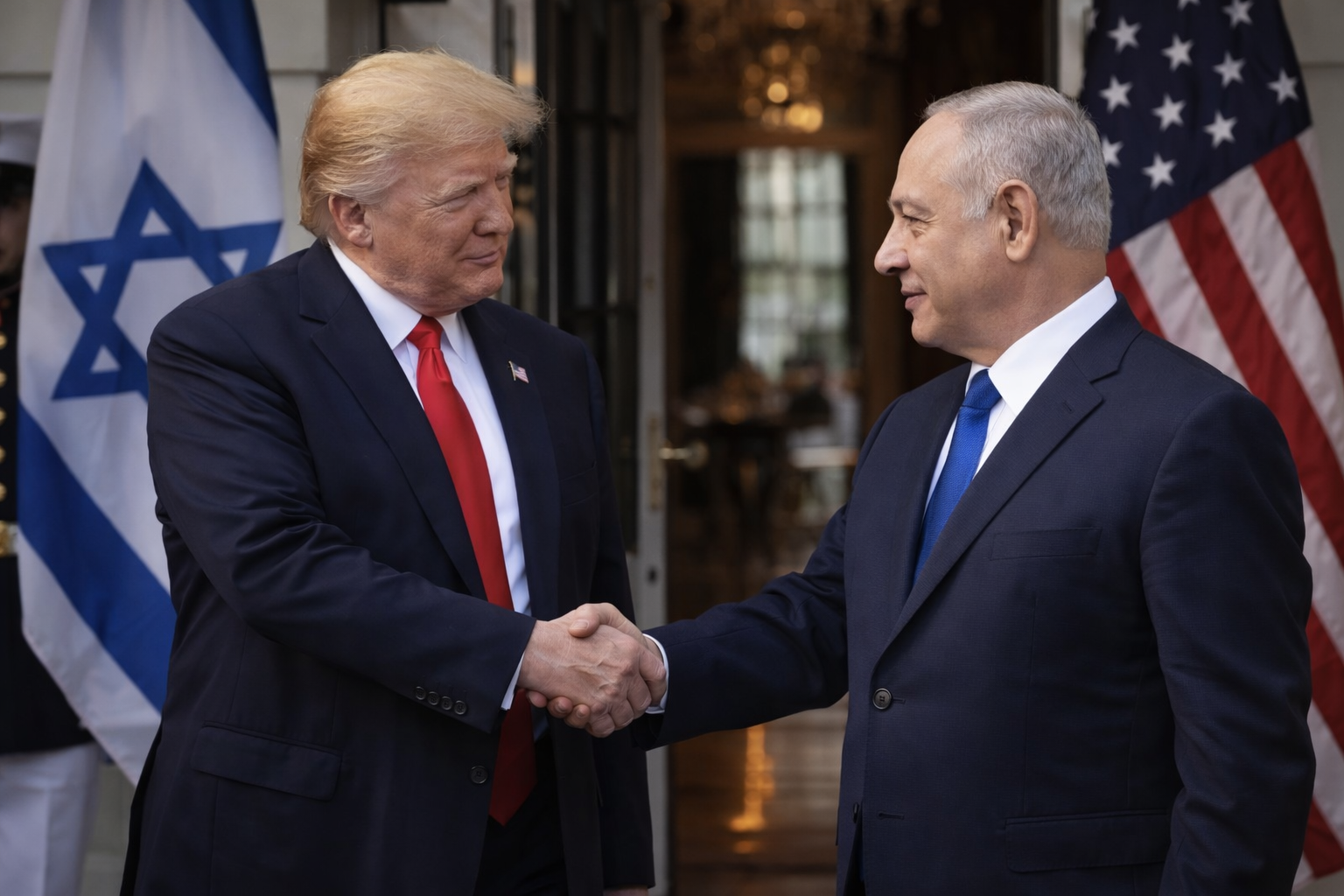
Trump Netanyahu Meeting held at the White House.
-
Focus placed on continuing Iran nuclear negotiations.
-
Middle East peace described as a strategic priority.
-
US-Israel alliance reaffirmed during discussions.
-
Global diplomatic implications expected.
Table of Contents
-
Trump Netanyahu Meeting at the White House
-
Focus on Iran Nuclear Talks
-
Why Iran Nuclear Negotiations Matter
-
Strategic Importance for Israel
-
United States Foreign Policy Goals
-
Middle East Peace and Regional Stability
-
Global Reactions to the Meeting
-
Historical Context of US-Iran Nuclear Talks
-
Political Implications for Trump and Netanyahu
-
What Happens Next?
-
FAQs
Trump Netanyahu Meeting at the White House Signals Diplomatic Momentum
The Trump Netanyahu Meeting at the White House has drawn significant global attention as both leaders emphasized the importance of continuing Iran nuclear negotiations. The high-level diplomatic engagement is being seen as a critical step toward addressing tensions in the Middle East and preventing further instability in the region.
During their meeting, former U.S. President Donald Trump and Israeli Prime Minister Benjamin Netanyahu discussed a range of strategic issues, but the primary focus remained on Iran’s nuclear program and the need for sustained diplomatic efforts. The Trump Netanyahu Meeting reflects ongoing efforts to strengthen U.S.-Israel ties while navigating complex geopolitical challenges.
This meeting comes at a time when tensions surrounding Iran’s nuclear ambitions remain a central concern for both Washington and Jerusalem.
Focus on Iran Nuclear Talks
A major highlight of the Trump Netanyahu Meeting was the emphasis on continuing negotiations with Iran regarding its nuclear program. Trump reportedly stressed that diplomatic channels must remain open, arguing that sustained talks are necessary to ensure regional security and prevent escalation.
Iran’s nuclear program has long been a source of international debate. Concerns center on uranium enrichment levels and the possibility of weaponization. While Iran maintains that its nuclear activities are for peaceful purposes, Western nations and Israel have expressed skepticism.
The official U.S. Department of State provides updates on nuclear diplomacy efforts here:
https://www.state.gov (DoFollow)
Why Iran Nuclear Negotiations Matter
The importance of Iran nuclear negotiations extends far beyond bilateral relations. The issue affects global energy markets, regional security alliances, and international non-proliferation frameworks.
If diplomatic talks succeed, they could reduce military tensions in the Middle East and prevent potential conflict scenarios. However, failure could increase instability in a region already facing multiple geopolitical challenges.
The International Atomic Energy Agency (IAEA) monitors nuclear programs globally:
https://www.iaea.org (DoFollow)
Strategic Importance for Israel
For Israel, Iran’s nuclear ambitions are considered an existential security concern. Netanyahu has consistently taken a firm stance against Iran acquiring nuclear capabilities. During the Trump Netanyahu Meeting, Israel’s security interests were reportedly central to the discussions.
Israel views diplomatic pressure combined with strategic deterrence as essential tools in preventing nuclear escalation. The meeting reaffirmed the long-standing strategic alliance between the two nations.
United States Foreign Policy Goals
The Trump Netanyahu Meeting also reflects broader U.S. foreign policy objectives in the Middle East. Stabilizing the region remains a priority, particularly amid shifting alliances and evolving security threats.
Maintaining strong ties with Israel while pursuing diplomatic solutions with Iran requires a delicate balance. U.S. policymakers must consider regional allies, energy security, and global diplomatic credibility.
More information about U.S. foreign policy strategies can be found at:
https://www.whitehouse.gov (DoFollow)
Middle East Peace and Regional Stability
One of the most significant themes emerging from the Trump Netanyahu Meeting was the pursuit of Middle East peace. Leaders highlighted that sustained diplomatic engagement with Iran could reduce tensions and create space for broader regional cooperation.
Middle East stability impacts global trade routes, oil markets, and international security partnerships. Any breakthrough in nuclear negotiations could positively influence broader peace efforts.
However, analysts caution that progress will require multilateral coordination involving European partners and regional stakeholders.
Global Reactions to the Trump Netanyahu Meeting
The Trump Netanyahu Meeting has prompted reactions from governments and analysts worldwide. Some observers welcomed the renewed focus on diplomacy, while others questioned the feasibility of meaningful progress without broader international cooperation.
European leaders have consistently supported diplomatic engagement with Iran, emphasizing the importance of compliance with nuclear monitoring agreements.
Meanwhile, Middle Eastern nations are closely monitoring developments, aware that outcomes could reshape regional power dynamics.
Historical Context of US-Iran Nuclear Talks
The Iran nuclear issue gained global prominence during negotiations that led to the 2015 Joint Comprehensive Plan of Action (JCPOA). The agreement aimed to limit Iran’s nuclear activities in exchange for sanctions relief.
Subsequent policy changes led to shifts in diplomatic momentum. The Trump Netanyahu Meeting now represents a renewed emphasis on dialogue, albeit within a complex geopolitical landscape.
Understanding this history is essential to evaluating the significance of current diplomatic efforts.
Political Implications for Trump and Netanyahu
The Trump Netanyahu Meeting also carries domestic political implications. For Trump, demonstrating leadership in foreign policy reinforces his strategic positioning. For Netanyahu, strong U.S. support strengthens his international standing.
Foreign policy achievements often influence domestic political narratives, particularly when national security is involved.
Observers suggest that diplomatic breakthroughs could reshape political discourse in both countries.
What Happens Next?
Following the Trump Netanyahu Meeting, diplomatic channels are expected to remain active. Experts anticipate continued back-channel negotiations, consultations with allies, and potential multilateral discussions.
Whether this meeting marks a turning point will depend on sustained engagement and mutual concessions. For now, it represents a significant diplomatic moment in ongoing Middle East negotiations.
FAQs
What was discussed in the Trump Netanyahu Meeting?
The leaders focused primarily on Iran nuclear talks and regional security.
Why are Iran nuclear talks important?
They impact Middle East stability, global security, and non-proliferation efforts.
Did the meeting produce a formal agreement?
No formal agreement was announced, but diplomatic efforts are expected to continue.
Why is Israel concerned about Iran’s nuclear program?
Israel considers it a major security threat.
Will negotiations continue?
Both leaders emphasized the importance of ongoing diplomatic engagement.
Final Summary
The Trump Netanyahu Meeting underscores the continued importance of diplomacy in addressing Iran’s nuclear ambitions. While challenges remain, the meeting signals renewed engagement aimed at fostering regional stability and preventing escalation.
If sustained, these diplomatic efforts could contribute to broader Middle East peace initiatives and reinforce strategic alliances.